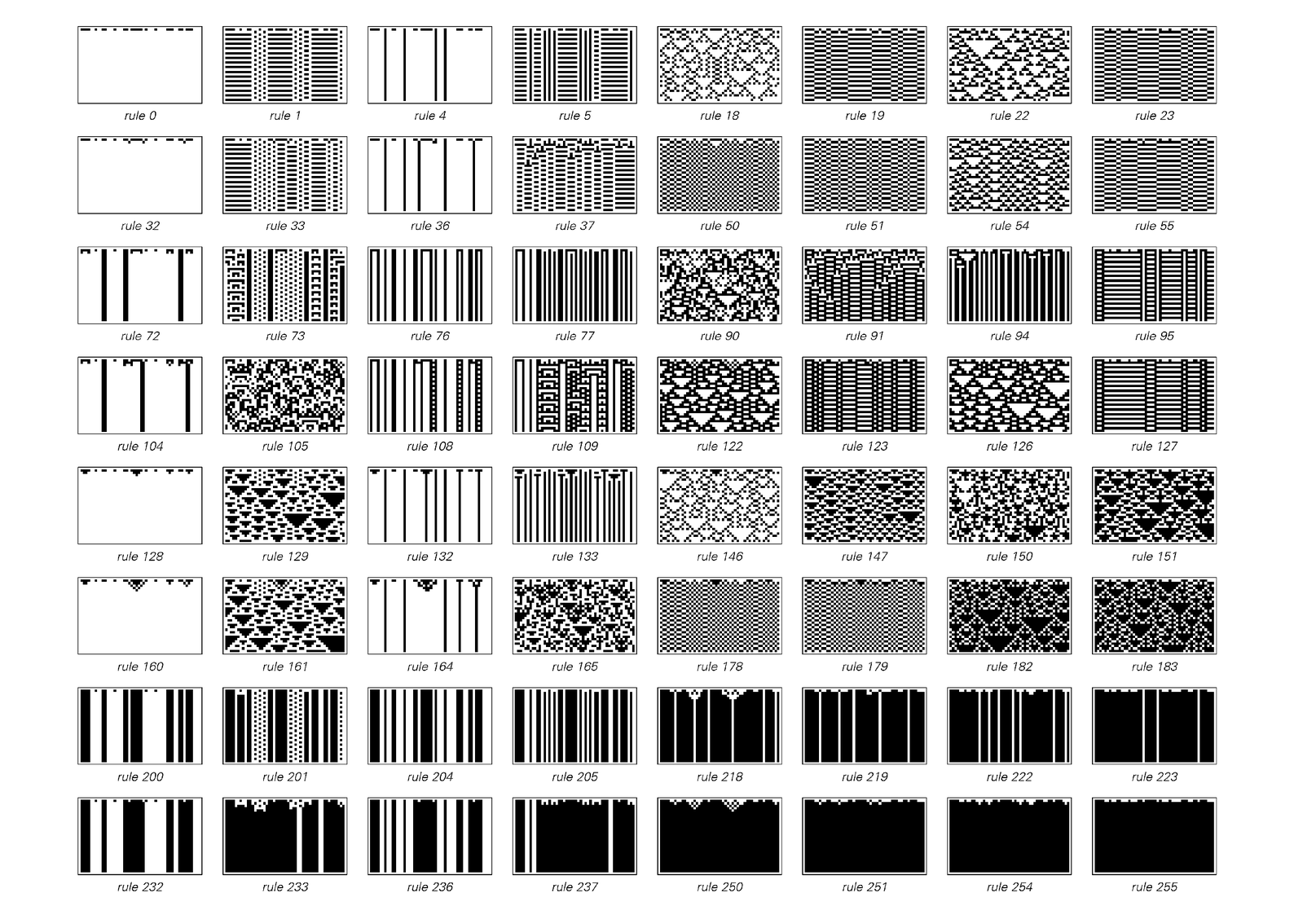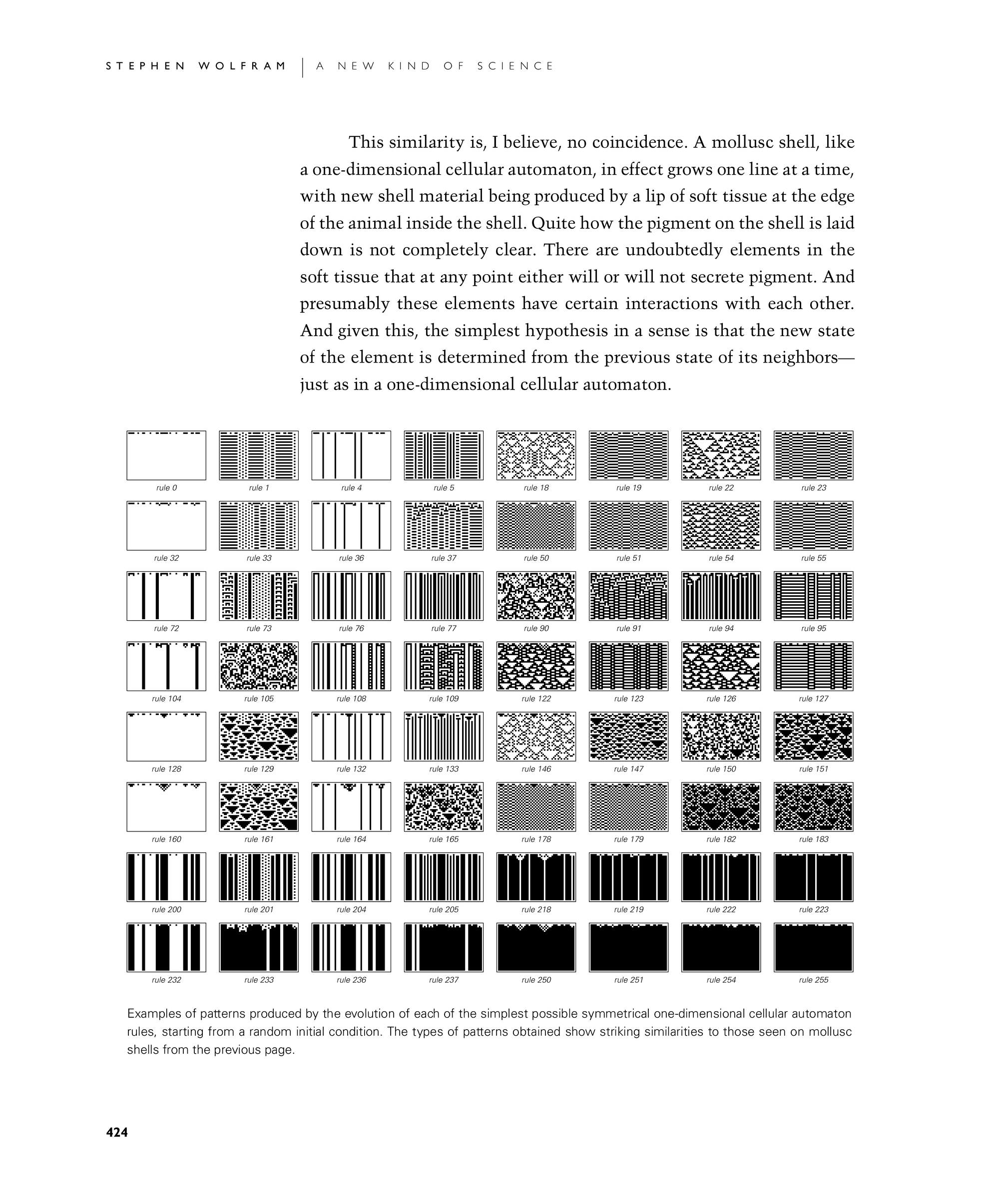
This similarity is, I believe, no coincidence. A mollusc shell, like a one-dimensional cellular automaton, in effect grows one line at a time, with new shell material being produced by a lip of soft tissue at the edge of the animal inside the shell. Quite how the pigment on the shell is laid down is not completely clear. There are undoubtedly elements in the soft tissue that at any point either will or will not secrete pigment. And presumably these elements have certain interactions with each other. And given this, the simplest hypothesis in a sense is that the new state of the element is determined from the previous state of its neighbors—just as in a one-dimensional cellular automaton.