

approach is to work like a naturalist—exploring and studying the various forms that exist in the world of simple programs.
I start by considering more general cellular automata, and then I go on to consider a whole sequence of other kinds of programs—with underlying structures further and further away from the array of black and white cells in the cellular automata of the previous chapter.
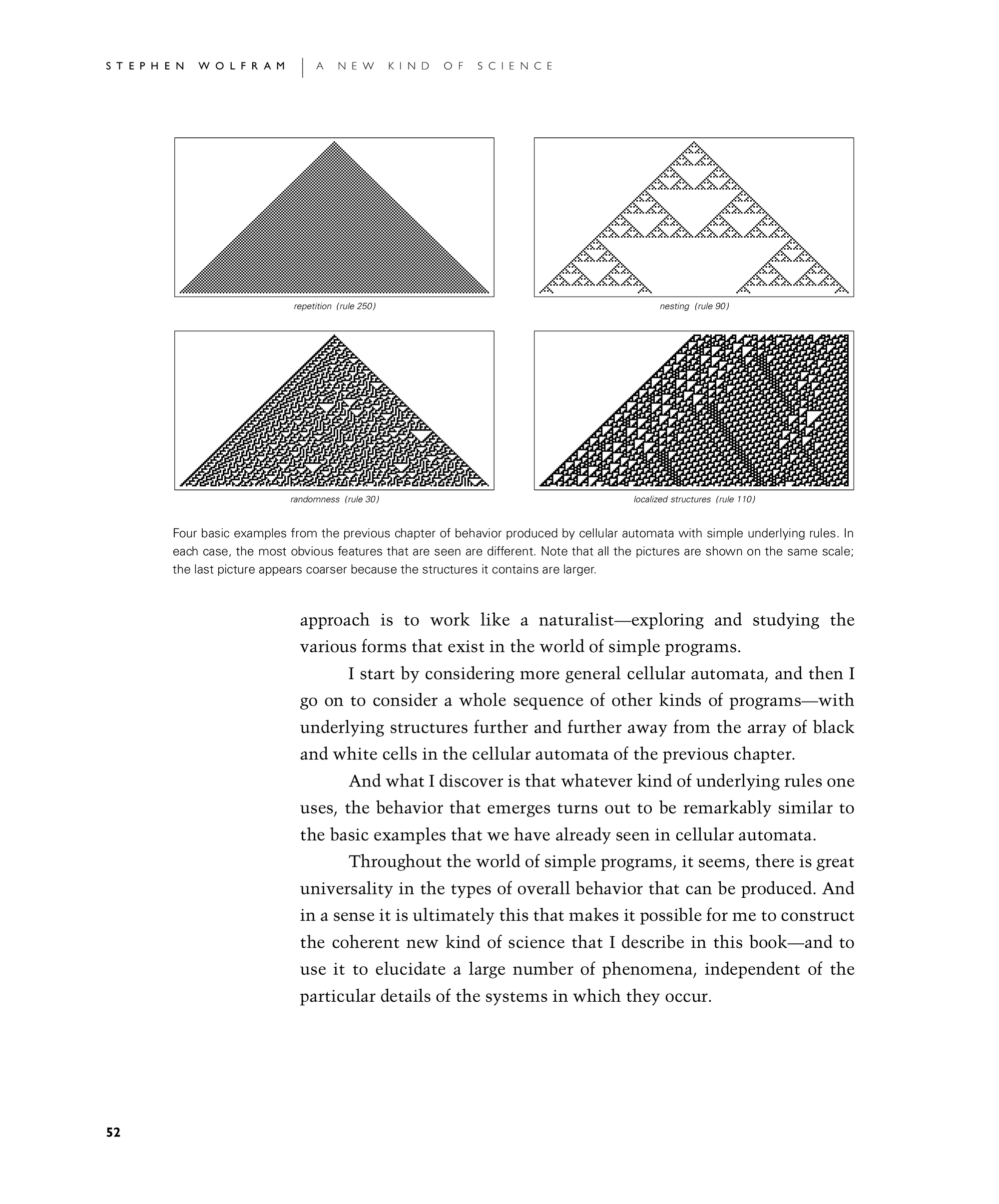
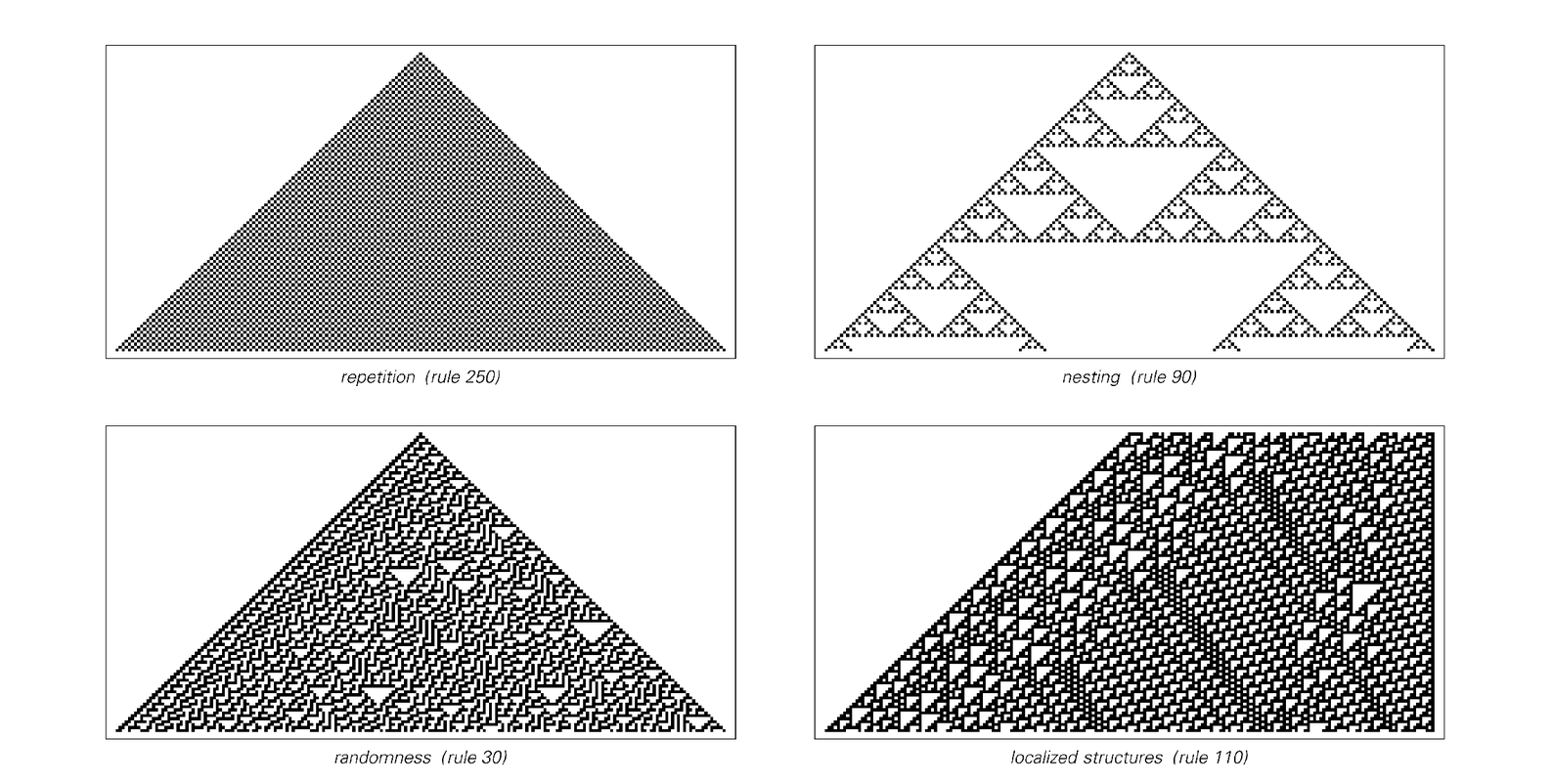
And what I discover is that whatever kind of underlying rules one uses, the behavior that emerges turns out to be remarkably similar to the basic examples that we have already seen in cellular automata.
Throughout the world of simple programs, it seems, there is great universality in the types of overall behavior that can be produced. And in a sense it is ultimately this that makes it possible for me to construct the coherent new kind of science that I describe in this book—and to use it to elucidate a large number of phenomena, independent of the particular details of the systems in which they occur.