Page 655: A Universal Cellular Automaton
An example of how a cellular automaton with three possible colors and nearest-neighbor rules can be emulated by a cullular automaton with only two possible colors but a larger number of neighbors
An example of how a cellular automaton with three possible colors and nearest-neighbor rules can be emulated by a cullular automaton with only two possible colors but a larger number of neighbors 2
An example of how a cellular automaton with three possible colors and nearest-neighbor rules can be emulated by a cullular automaton with only two possible colors but a larger number of neighbors 3
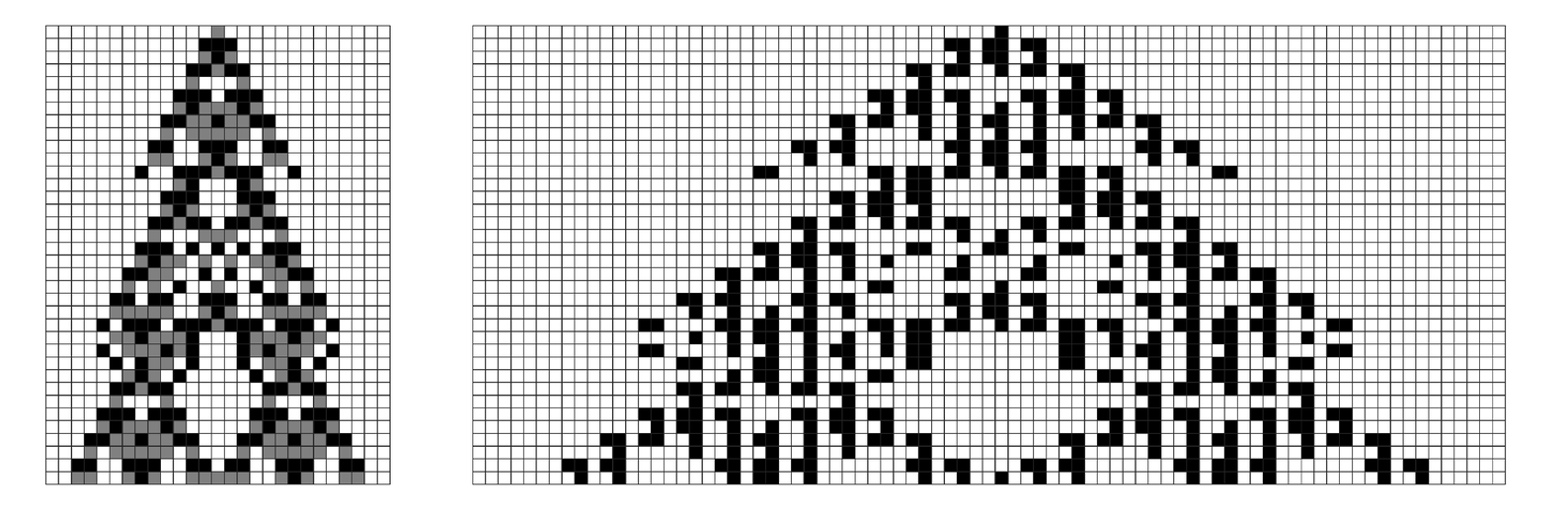
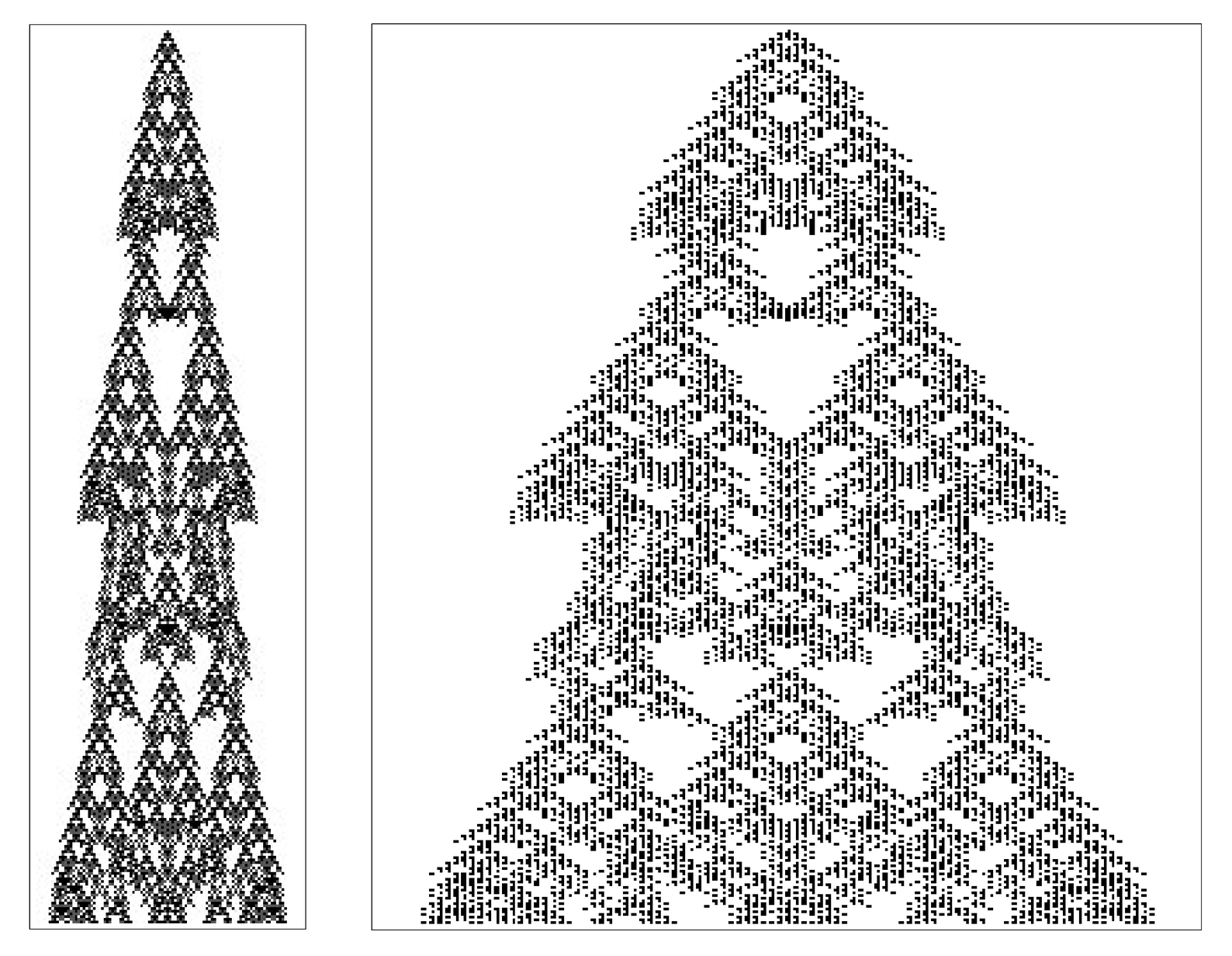
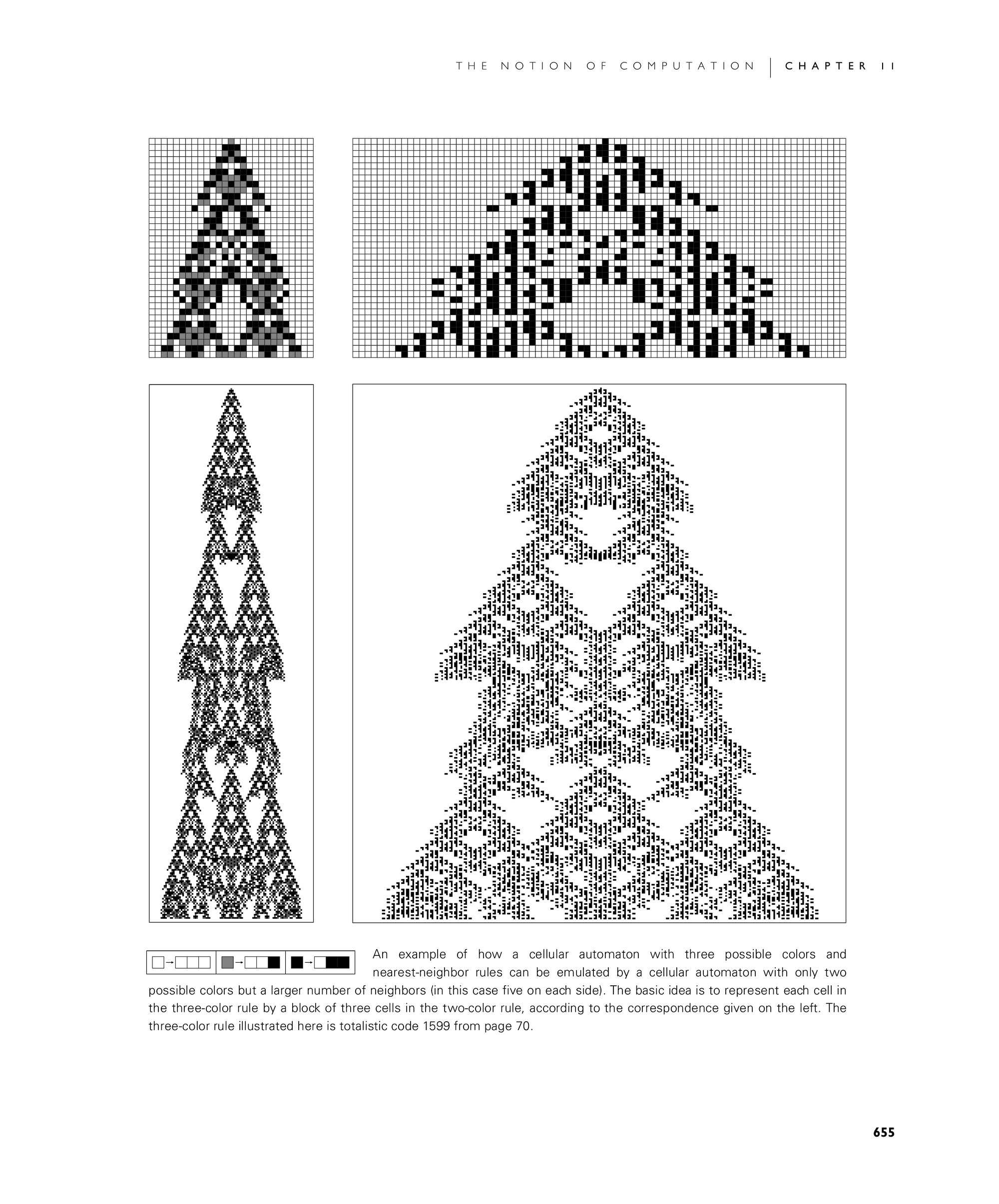
An example of how a cellular automaton with three possible colors and nearest-neighbor rules can be emulated by a cellular automaton with only two possible colors but a larger number of neighbors (in this case five on each side). The basic idea is to represent each cell in the three-color rule by a block of three cells in the two-color rule, according to the correspondence given on the left. The three-color rule illustrated here is totalistic code 1599 from page 70.

From Stephen Wolfram: A New Kind of Science [citation]