

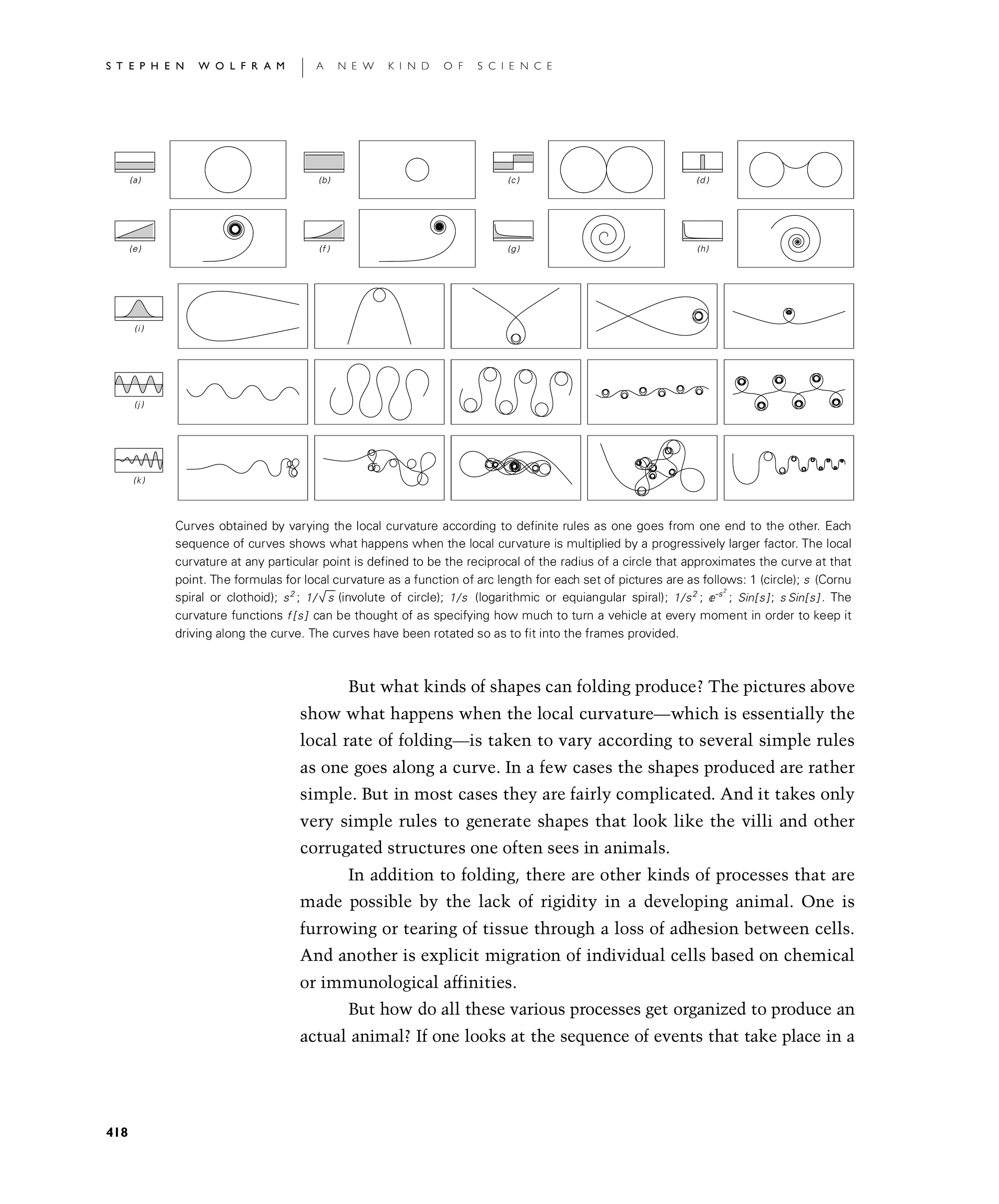
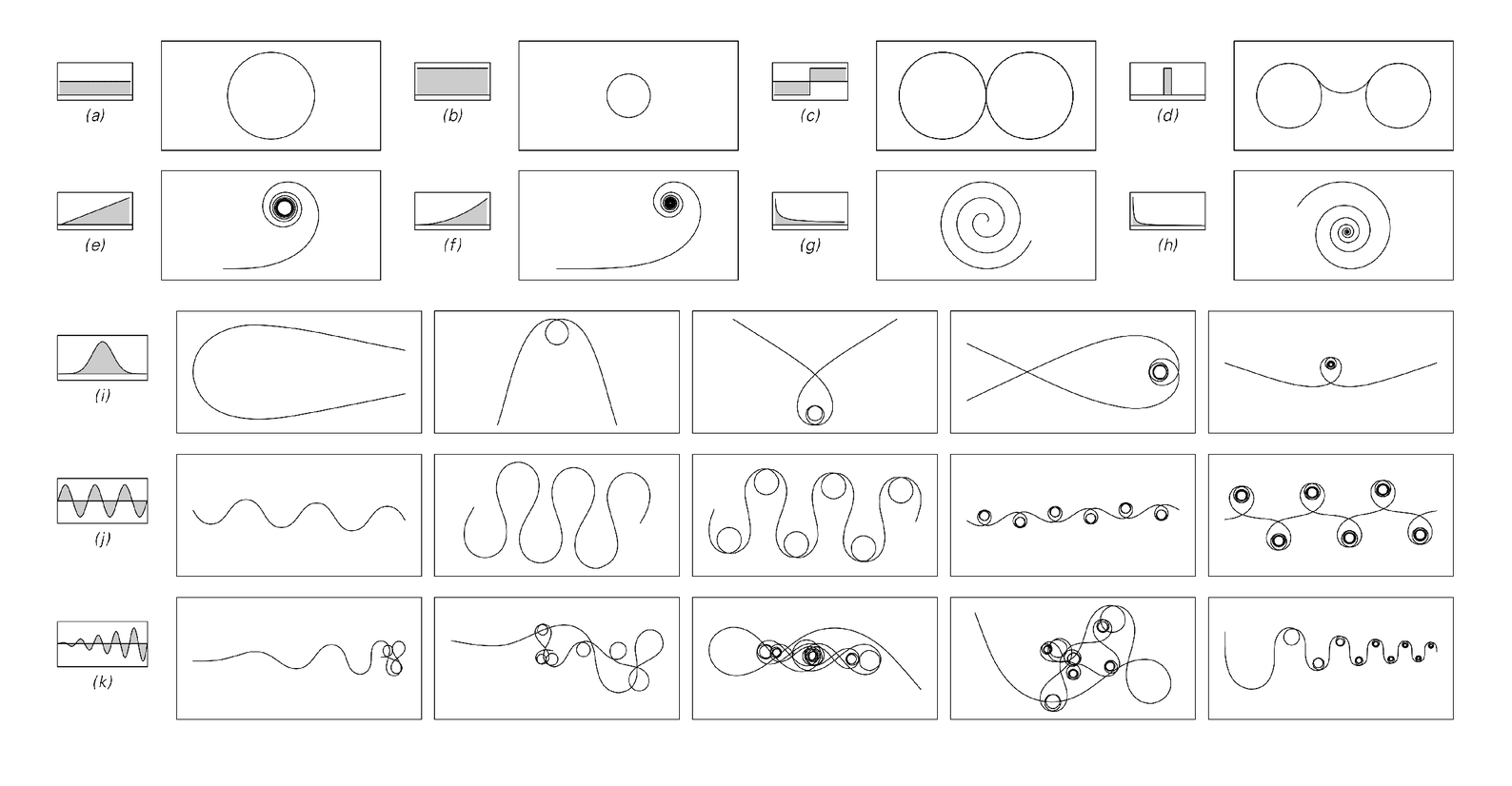
But what kinds of shapes can folding produce? The pictures above show what happens when the local curvature—which is essentially the local rate of folding—is taken to vary according to several simple rules as one goes along a curve. In a few cases the shapes produced are rather simple. But in most cases they are fairly complicated. And it takes only very simple rules to generate shapes that look like the villi and other corrugated structures one often sees in animals.
In addition to folding, there are other kinds of processes that are made possible by the lack of rigidity in a developing animal. One is furrowing or tearing of tissue through a loss of adhesion between cells. And another is explicit migration of individual cells based on chemical or immunological affinities.
But how do all these various processes get organized to produce an actual animal? If one looks at the sequence of events that take place in a