

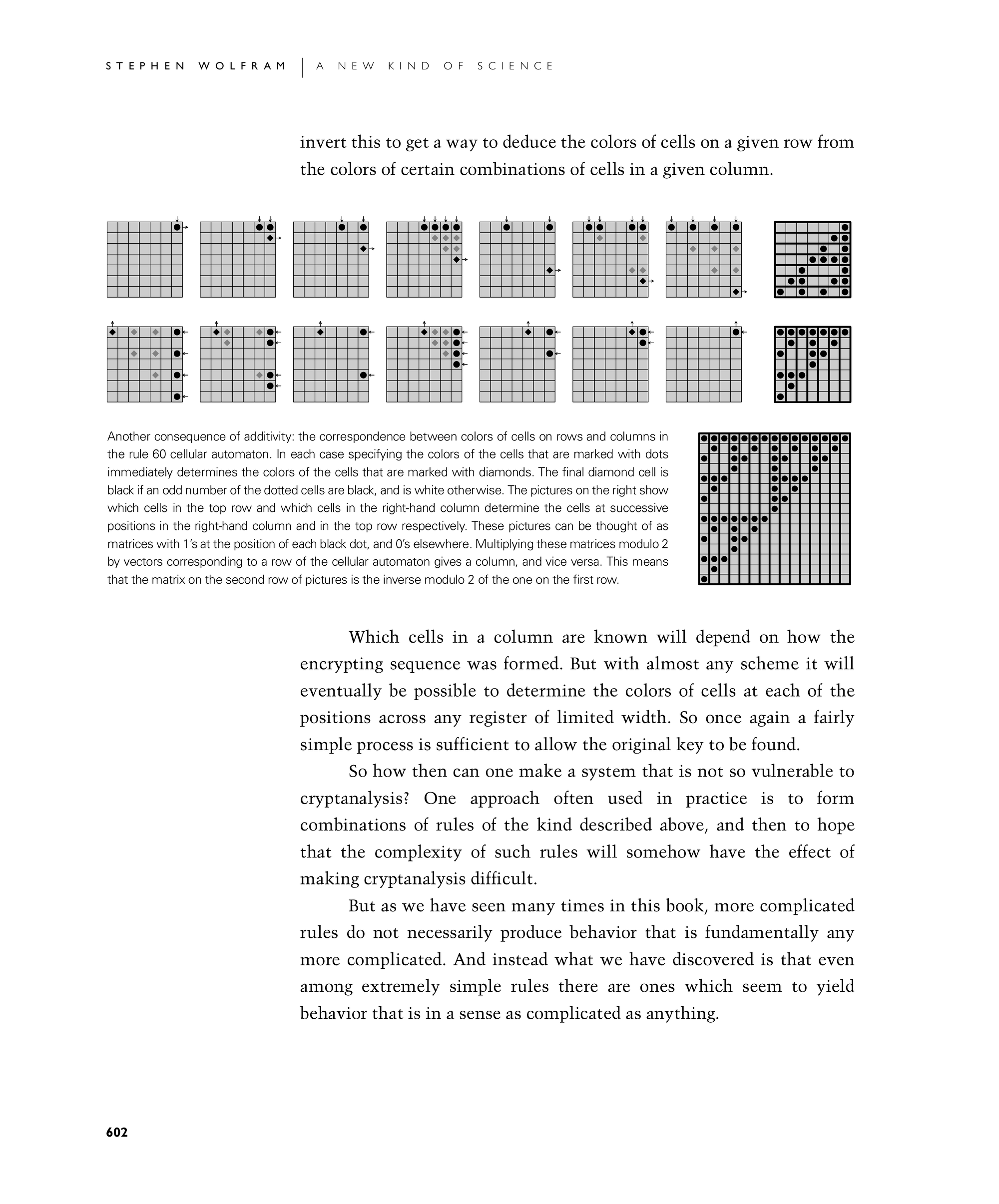
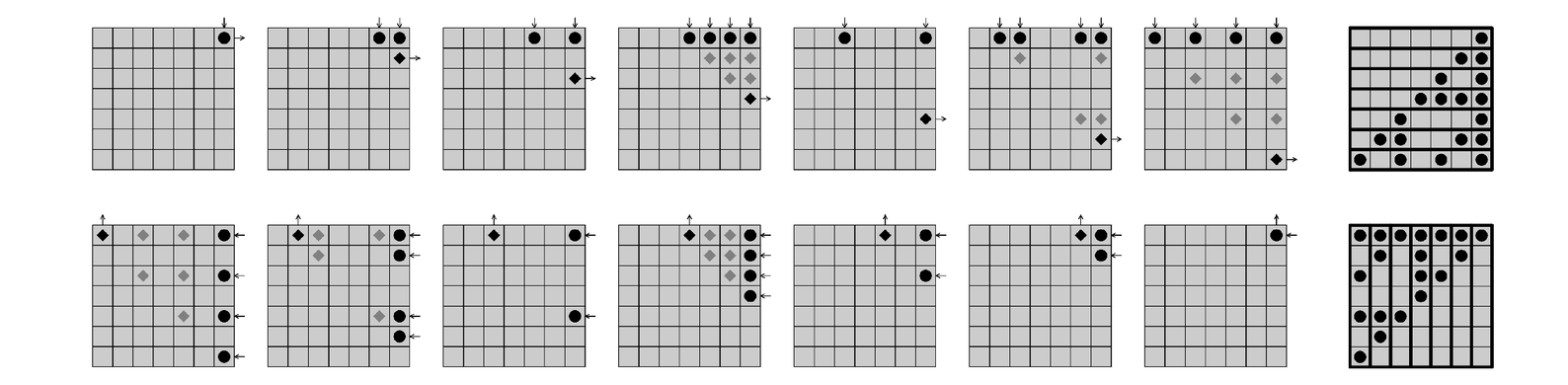
invert this to get a way to deduce the colors of cells on a given row from the colors of certain combinations of cells in a given column.
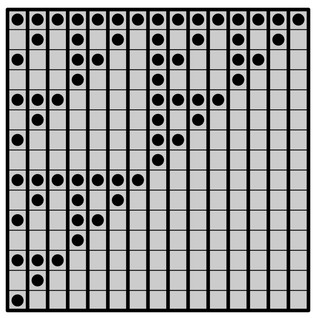
Which cells in a column are known will depend on how the encrypting sequence was formed. But with almost any scheme it will eventually be possible to determine the colors of cells at each of the positions across any register of limited width. So once again a fairly simple process is sufficient to allow the original key to be found.
So how then can one make a system that is not so vulnerable to cryptanalysis? One approach often used in practice is to form combinations of rules of the kind described above, and then to hope that the complexity of such rules will somehow have the effect of making cryptanalysis difficult.
But as we have seen many times in this book, more complicated rules do not necessarily produce behavior that is fundamentally any more complicated. And instead what we have discovered is that even among extremely simple rules there are ones which seem to yield behavior that is in a sense as complicated as anything.