

But it is rather easy to foil this particular approach to cryptanalysis: all one need do is not sample every single cell in a given column in forming the encrypting sequence. For without every cell there does not appear to be enough information for any kind of local rule to be able to deduce one column from others.
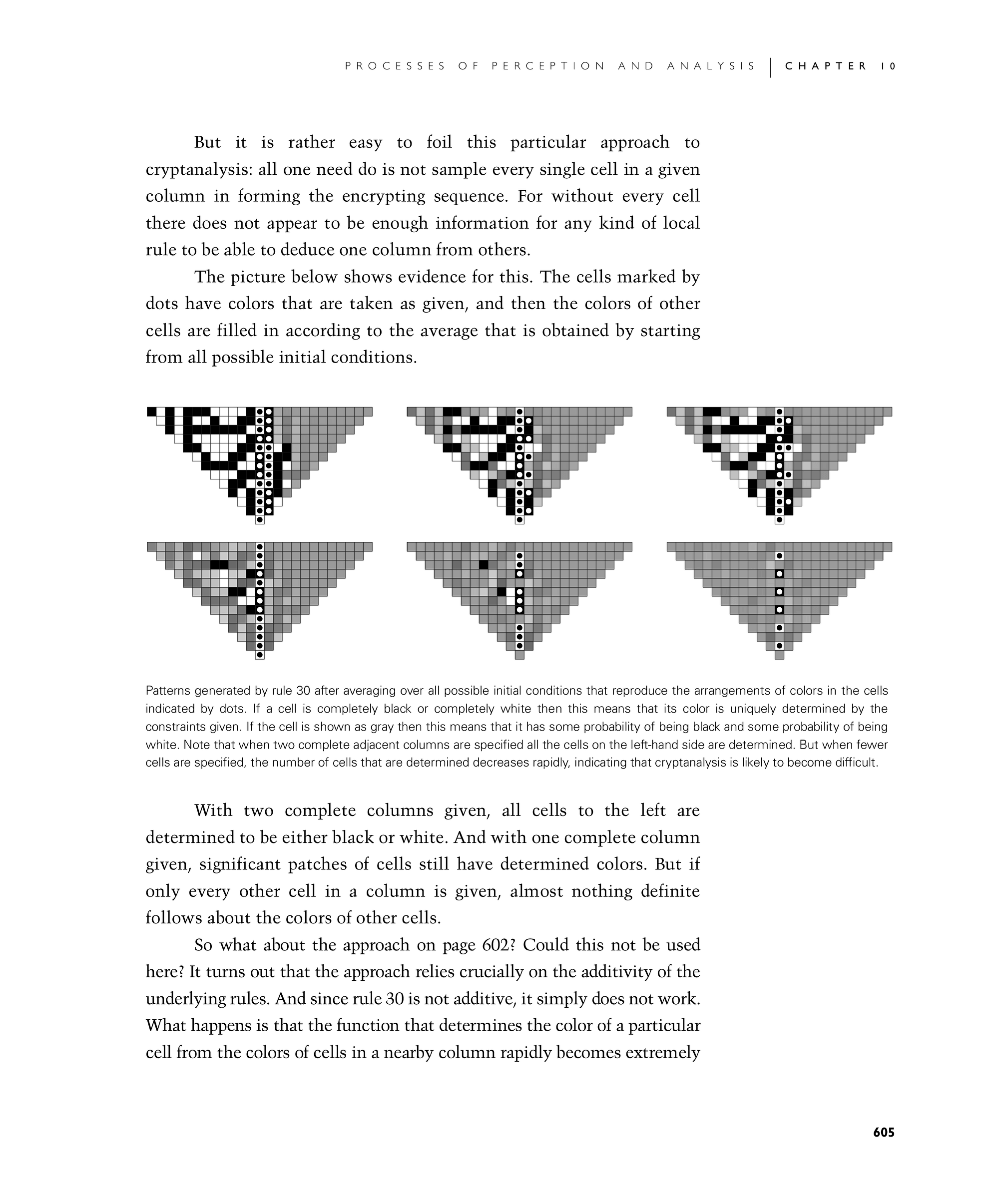
The picture below shows evidence for this. The cells marked by dots have colors that are taken as given, and then the colors of other cells are filled in according to the average that is obtained by starting from all possible initial conditions.
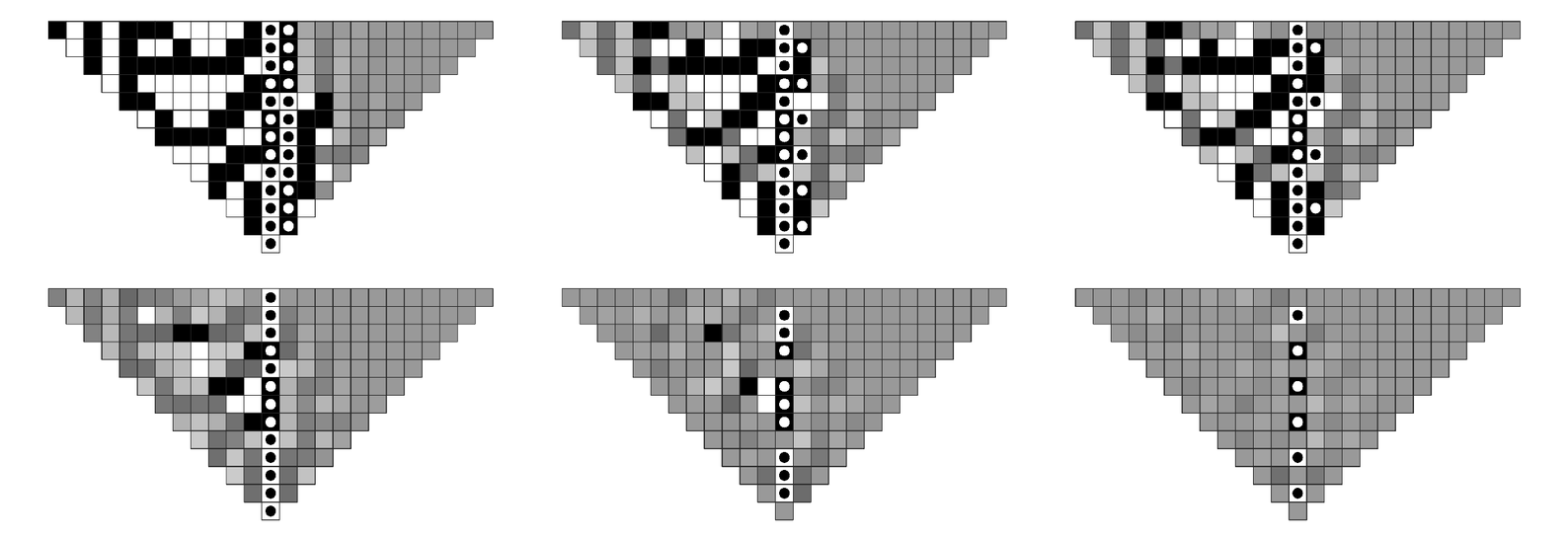
With two complete columns given, all cells to the left are determined to be either black or white. And with one complete column given, significant patches of cells still have determined colors. But if only every other cell in a column is given, almost nothing definite follows about the colors of other cells.
So what about the approach on page 602? Could this not be used here? It turns out that the approach relies crucially on the additivity of the underlying rules. And since rule 30 is not additive, it simply does not work. What happens is that the function that determines the color of a particular cell from the colors of cells in a nearby column rapidly becomes extremely