

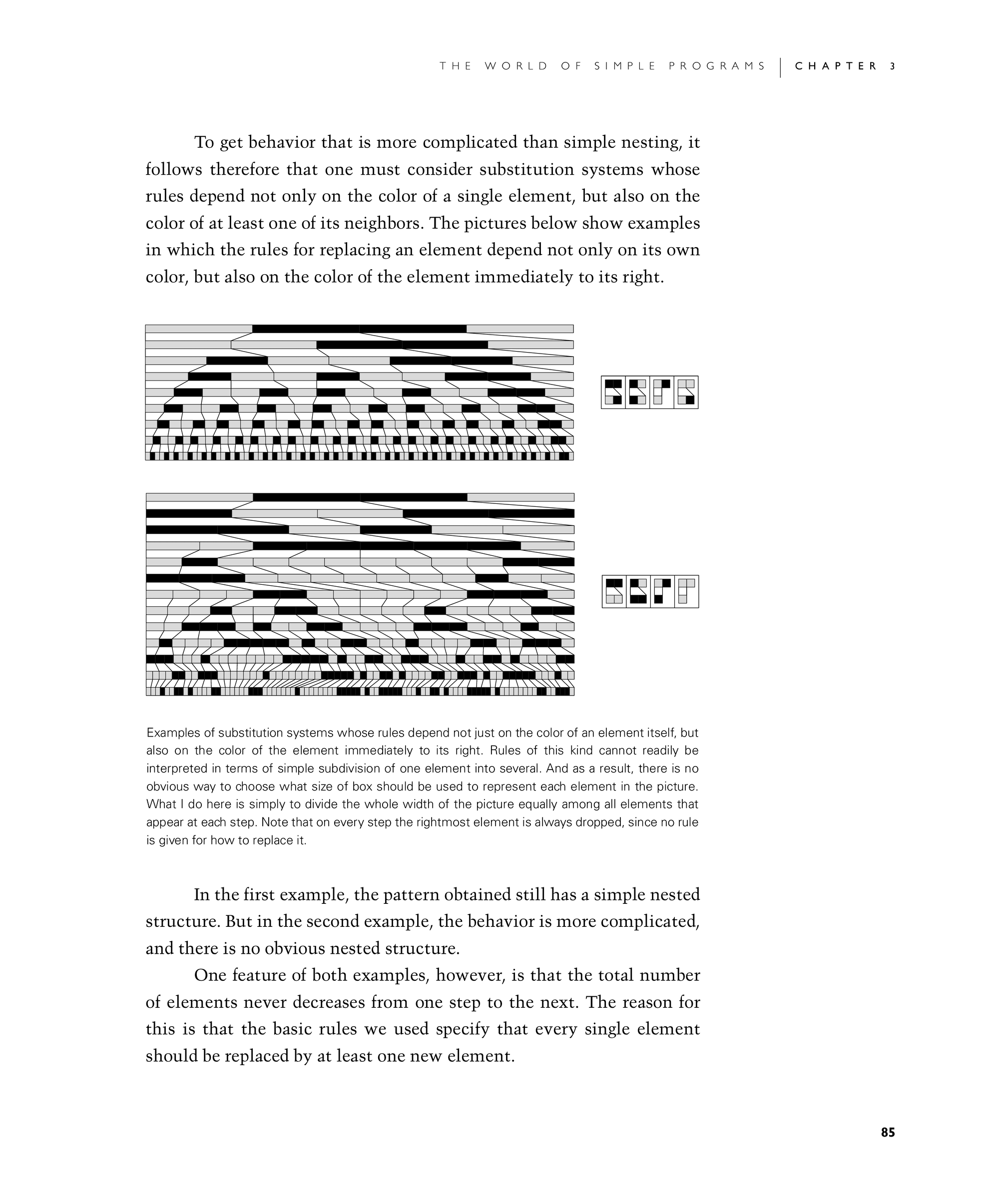
To get behavior that is more complicated than simple nesting, it follows therefore that one must consider substitution systems whose rules depend not only on the color of a single element, but also on the color of at least one of its neighbors. The pictures below show examples in which the rules for replacing an element depend not only on its own color, but also on the color of the element immediately to its right.
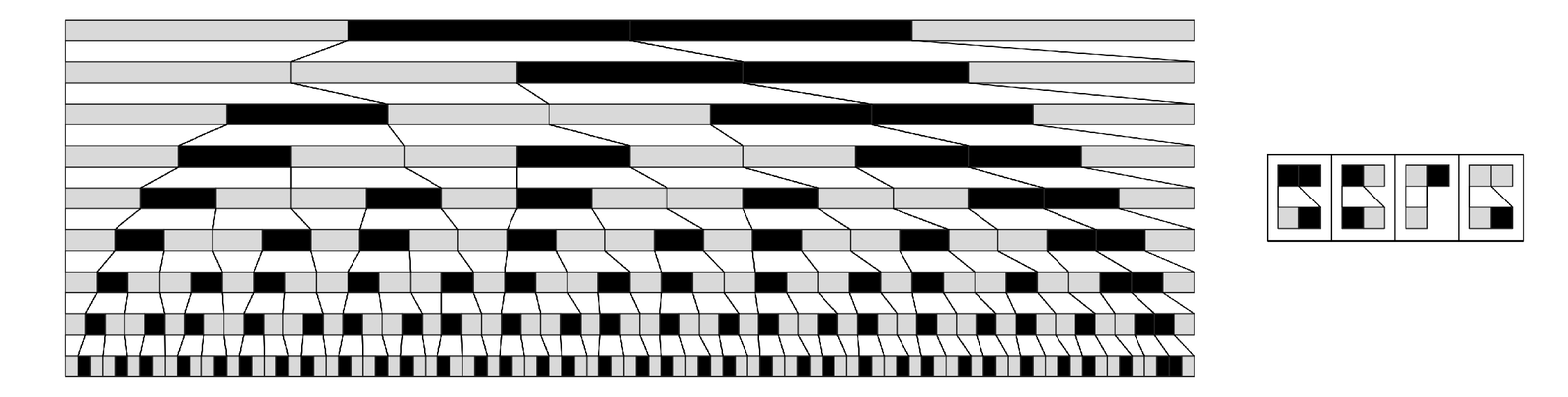
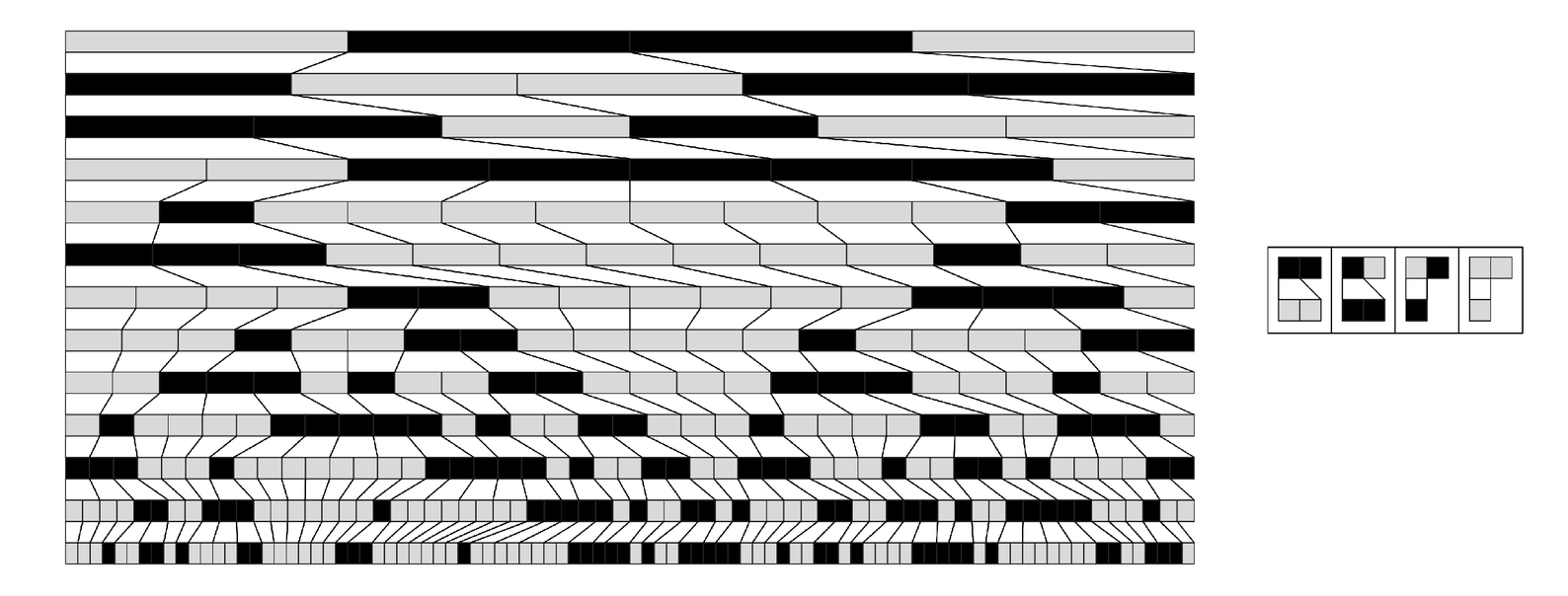
In the first example, the pattern obtained still has a simple nested structure. But in the second example, the behavior is more complicated, and there is no obvious nested structure.
One feature of both examples, however, is that the total number of elements never decreases from one step to the next. The reason for this is that the basic rules we used specify that every single element should be replaced by at least one new element.